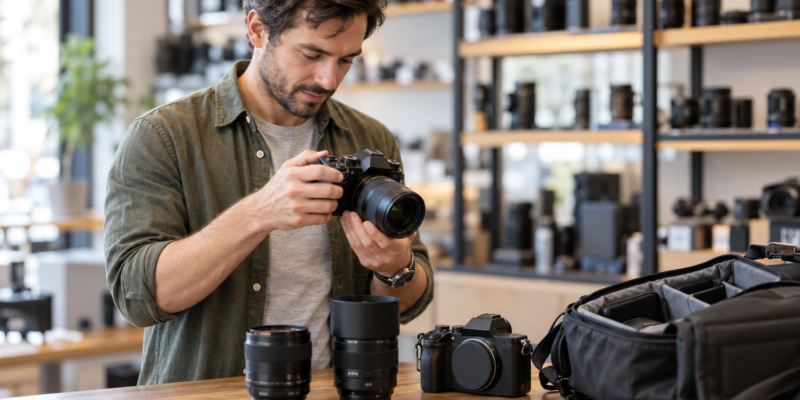
Buying or Hiring Camera Gear: How to Decide
A visit to a camera shop is more useful when a photographer arrives with a clear idea of what the equipment needs to achieve. A family holiday, an indoor event and a weekend photographing wildlife can each call for different priorities. For those searching for camera shop perth options, handling equipment in person provides an opportunity to assess its size, controls and comfort. That practical experience can reveal more about everyday suitability than a list of specifications alone. Photographers considering camera rental perth services can also use a short hire period to assess unfamiliar equipment before deciding whether ownership makes sense.
The choice between buying and hiring depends on how often the gear will be used, the demands of the shoot and the equipment already available. Starting with those questions helps keep the decision focused on photography rather than the appeal of something new.
Identify what the current equipment cannot do
Before considering an upgrade, it helps to describe the problem in practical terms. A photographer might struggle to carry a heavy kit during long walks, need a wider view for interiors or want a closer view of distant subjects.
These are different problems, and replacing the camera body may not address all of them. A different lens, a suitable support or a smaller bag could be more relevant to the way the equipment is used.
Reviewing recent photographs can help narrow the issue. Images that repeatedly miss the intended result provide a starting point for discussion with knowledgeable staff. Bringing examples also makes it easier to explain the desired improvement.
The existing kit deserves consideration too. A new purchase should be assessed alongside the lenses, batteries, memory cards and accessories it will need. Compatibility should be confirmed for the specific models involved rather than assumed from the brand name.
Consider buying for regular use
Ownership is worth considering when equipment will have a consistent role. A lens used most weekends or a camera carried on daily outings offers repeated opportunities to become familiar with its operation.
That familiarity has practical value. Regular use allows a photographer to learn where controls sit, organise preferred settings and develop a comfortable routine for packing and preparation.
However, the purchase price is only the beginning of the budget. Depending on the item, additional costs may include spare batteries, storage, protective equipment and insurance. These should be considered before comparing the total cost with hiring.
There is also a difference between planned use and realistic use. A large lens may suit an occasional sporting event but remain at home during ordinary outings. A smaller item that gets used frequently may be a better fit for the photographer’s habits.
Use hiring for occasional needs and useful trials
Hiring can suit equipment needed for a particular assignment, trip or event. It provides access for a defined period without requiring a purchase for something that may see little use afterwards.
A useful comparison includes the full hire period, collection and return arrangements, and any accessories required. The booking may need to begin before the shoot so there is time to inspect the equipment and become familiar with it.
Terms also matter. Photographers should check identification requirements, deposits, cancellation conditions, late return charges and responsibility for loss or damage. Any protection offered should be reviewed for exclusions and excess payments.
Hiring can also support a purchase decision. Testing a camera during a normal outing reveals how it feels after several hours, whether the controls are comfortable and how easily it fits into an existing bag. Those observations can be difficult to make during a brief demonstration.
Test equipment under realistic conditions
A useful trial reflects the intended photography. Someone choosing a travel camera can assess how comfortably it carries during a walk, while a photographer considering a portrait lens can test it at the working distances available in their usual space.
The aim is to answer specific questions. Is the equipment comfortable to hold? Are commonly used controls easy to reach? Does its size make it convenient enough to bring along?
Photographs should also be reviewed afterwards on the screen normally used for editing or sharing. Comparing results with the existing kit can help establish whether the change delivers a worthwhile improvement.
For an important event, familiarity needs its own preparation time. Checking batteries, cards, settings and essential functions before leaving reduces avoidable surprises. Unfamiliar equipment should be practised with before it becomes central to a shoot that cannot easily be repeated.
Compare the complete commitment
Neither buying nor hiring is automatically the better choice. Ownership brings ongoing access, while hiring provides access for a limited need.
The comparison becomes clearer when based on a realistic number of uses, the complete costs and the practical demands of collecting, storing and maintaining the gear. A useful decision supports the photographs being planned and leaves room in the budget for getting out and taking them.